

Photo by Casey Chae on Unsplash
If you’re learning Polish, you’ve probably already discovered that Polish people have a slightly unusual relationship with language.
You can spend months learning noun cases, memorising verb aspects and trying to figure out why this particular ending is suddenly different from that particular ending — and then a Polish person casually says something about a bear’s skin, a windmill and gingerbread, and you’re back to square one.
Polish idioms can be confusing.
And sometimes they are absolutely hilarious.
Every language has expressions that don’t make much sense if you translate them word for word. English has plenty of them too. An English person may suggest you “break a leg” before an exam, or say they accidentally “spilled the beans”.
So here are some of my favourites Polish idioms.
1. Nie mój cyrk, nie moje małpy

Literally: “Not my circus, not my monkeys.”
This means more or less “not my problem” or “not my business.”
Imagine that two people are having a ridiculous argument at work. You have absolutely nothing to do with it. You are standing there, watching the chaos unfold and thinking:
Well… not my circus, not my monkeys.
And honestly, what a beautiful philosophy for life.
2. Co ma piernik do wiatraka?
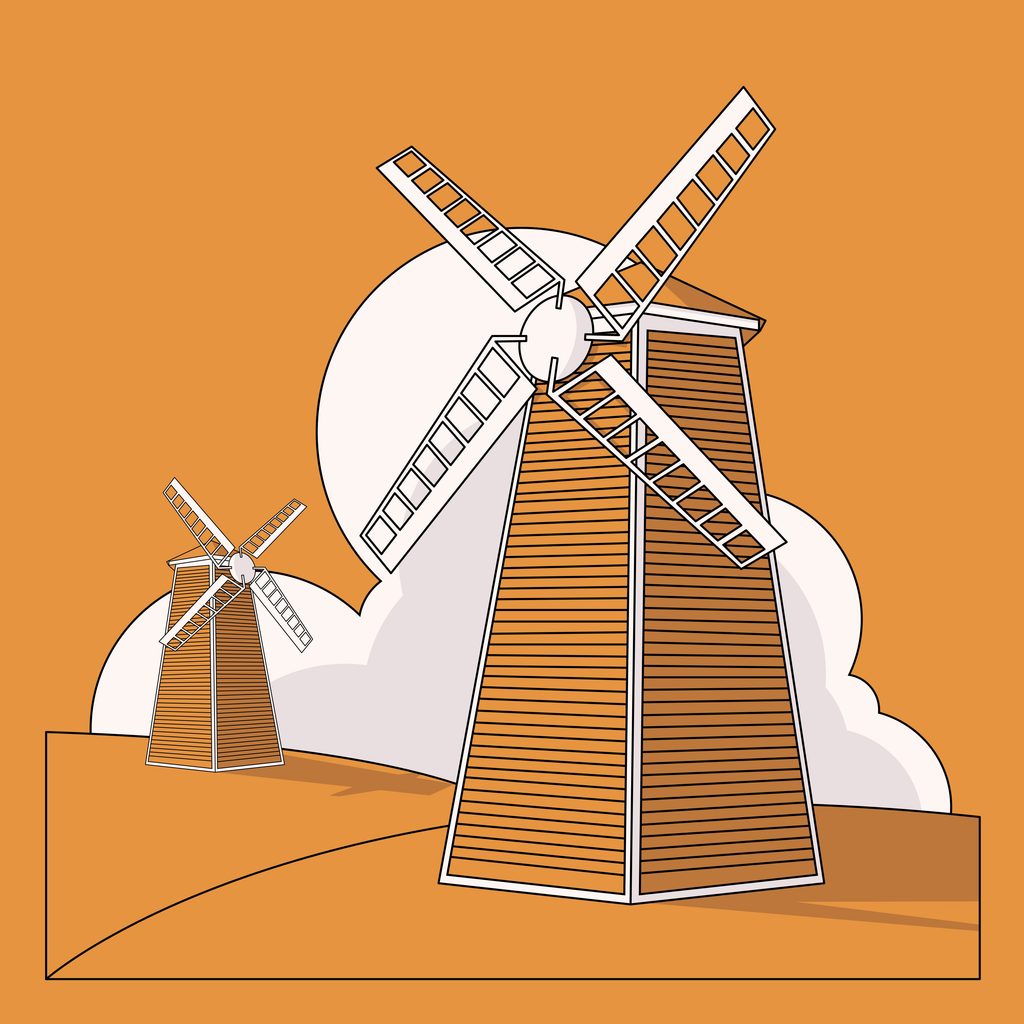
Illustration by Ahmed Hossam on Unsplash
Literally: “What does gingerbread have to do with a windmill?”
Imagine you’re having a perfectly normal conversation and someone suddenly brings up something that has absolutely nothing to do with the topic.
In Polish, you can ask:
Co ma piernik do wiatraka?
The English equivalent would be something like: “What does that have to do with anything?”
3. Nie dziel skóry na niedźwiedziu
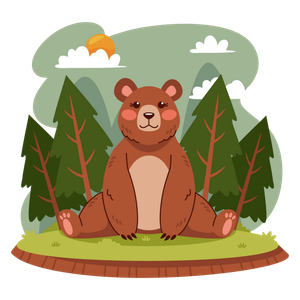
Literally: “Don’t divide the skin on the bear.”
This sounds like the beginning of a rather unpleasant story. Fortunately, you don’t actually need to go around dividing bear skin.
The expression means, basically, don’t make plans based on something that hasn’t happened yet. Or in English one might say ”don’t count your chickens before they hatch”.
You might use it for example, when someone has already started planning what they’re going to do with their new salary before they’ve even got the job.
It’s actually quite a useful expression, and only slightly threatening when you think about the literal version.
4. Mieć muchy w nosie
Literally: “To have flies in your nose.”
(Seriously? Who was the first one to make it up?)
Mieć muchy w nosie means to be grumpy, irritated or in a bad mood.
It’s a very useful expression because, let’s be honest, sometimes people do seem to have flies in their noses.
5. Bułka z masłem
Literally: “A bread roll with butter.”
Finally, an idiom involving food that doesn’t require us to imagine insects or animal skin.
Bułka z masłem means that something is very easy.
It’s basically the Polish equivalent of “piece of cake.”
And if you’ve ever learned Polish grammar, you will probably appreciate the irony of calling anything in Polish “bułka z masłem.”
6. Robić z igły widły

Illustration by Hanin Abouzeid on Unsplash
Literally: “To make a pitchfork out of a needle.”
This means to make a big deal out of something small.
The English equivalent is perhaps “to make a mountain out of a molehill.”
In Polish, you have a tiny needle and somehow you’ve turned it into a pitchfork. Quite an impressive transformation, really!
So if someone is dramatically overreacting to a tiny problem, you can tell them:
Robisz z igły widły! (You’re making a pitchfork out of a needle).
Although perhaps don’t say this to someone who already has flies up in their nose. Unless you enjoy unnecessary conflict. Up to you. Not my circus, not my monkeys.
7. Rzucać grochem o ścianę
Literally: “To throw peas at a wall.”
You keep explaining something, yet the other person doesn’t listen. You explain it again. Still nothing. In English, you’re talking to a brick wall. In Polish you go an extra step and throw peas at it. I mean, why wouldn’t you?
You can say: “Rozmawiać z Adamem to jak rzucać grochem o ścianę“. Talking to him is like throwing peas at a wall. Same effect. Nothing.
8. Spaść z księżyca

Illustration by Public domain vectors on Unsplash
Literally: “To fall from the moon.”
If someone seems completely unaware of something that everyone else knows, you might ask:
Spadłeś/Spadłaś z księżyca?
“Did you fall from the moon?”
It’s similar to saying “Where have you been?” or “Have you been living under a rock?”
Well, it makes sense. If you’ve just fallen from the moon, you probably don’t really know what is going on.
9. Mieć kota

Illustration by Brenda Carolina Ortiz Diaz on Unsplash
Literally: “To have a cat.”
This one needs a little warning because mieć kota can, of course, literally mean that you have a cat. However, it can also mean being obsessed with something or being a little crazy about it.
So if someone says:
Mam kota na punkcie książek.
They’re not necessarily telling you that they own a particularly literary cat. They’re saying that they’re crazy about books.
10. Myśleć o niebieskich migdałach

Literally: “To think about blue almonds.”
Yes.
Blue.
Almonds.
Myśleć o niebieskich migdałach means to daydream, to think about nothing in particular, or simply to have your head in the clouds.
Somehow, someone one day decided that when you’re sitting there staring into space instead of paying attention to what is happening around you, you must be thinking about blue almonds. I mean, what else would you be doing?
So the next time a Polish person tells you that you’re not paying attention, don’t worry. Just tell them you were thinking about blue almonds. We understand.
Why should you learn Polish idioms?
Obviously, you don’t need to learn every Polish idiom. But idioms are worth learning because they help you understand how Polish is actually spoken. When you hear someone say something about gingerbread and a windmill and immediately understand what they mean – well that’s when you know things are getting serious.
The best way to learn idioms
Don’t just memorise a list of expressions, but try to learn them in context. So listen to Polish speakers on the radio and podcasts, watch Polish films and series, read Polish books and social media. Pay attention to the expressions that keep appearing. And don’t be afraid to use them yourself! Eventually, the expressions that once sounded completely bizarre will start feeling natural. And when you hear someone say something about gingerbread and a windmill and immediately understand what they mean – well that’s when you know things are getting serious.
Want to learn more everyday Polish?

Learning Polish isn’t just about memorising vocabulary and getting your head around all those grammatical cases. Yes, it is important, but where is all the fun? My goal is to help you feel more confident using Polish in real-life situations, rather than simply knowing how to fill in a grammar exercise correctly.
So if you’re ready to learn some real-life Polish (and spend a little less time thinking about blue almonds), check out my online classes and start your Polish learning journey.